
FUT Hair Transplants in Raleigh, NC
A Proven Approach for Larger Hair Restoration Procedures
FUT hair transplantation uses a narrow strip of donor tissue to obtain follicular-unit grafts for transplantation. For appropriate candidates, it can be an effective option when a larger number of grafts or careful donor planning is a priority.
What Is an FUT Hair Transplant?
Follicular Unit Transplantation, or FUT, is a surgical hair-restoration technique in which a narrow strip of tissue is removed from the donor area, typically at the back of the scalp.
The donor strip is then carefully divided under magnification into individual follicular-unit grafts containing naturally occurring groups of hairs.
Those grafts are prepared and transplanted into the areas being restored.
How FUT Hair Transplantation Works
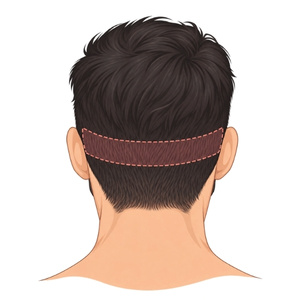
Donor Area Is Planned
A section of tissue is selected based on scalp, donor density, and the number of grafts needed.
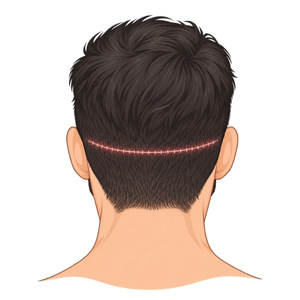
Donor Strip Removed
The selected strip of tissue is surgically removed and the donor area is closed with sutures.
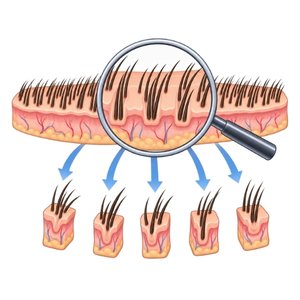
Grafts Are Prepared
Our surgical team carefully separates the tissue under magnification into individual follicular-unit grafts.
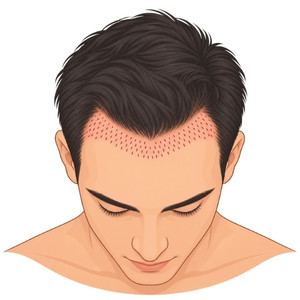
Sites Created
The areas being restored are planned with attention to hair direction, density, and overall design.
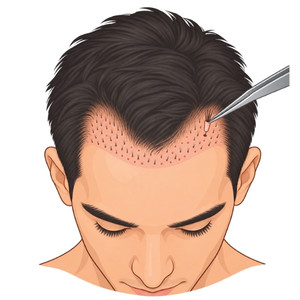
Grafts Are Placed
Prepared grafts are placed into the recipient sites according to the individualized transplant plan.
Why FUT May Be Recommended
Efficient Graft Harvesting
FUT can allow a larger number of follicular units to be harvested from a concentrated donor area.
Preserve Surrounding Hair
Only the hair within the donor strip generally needs to be trimmed, allowing surrounding hair to remain longer.
Donor Planning
FUT can be useful when conserving other areas of the donor region for possible future procedures is important.
Established Technique
FUT has been used in hair transplantation for many years and remains an option for appropriately selected patients.
Understanding the FUT Donor Scar
Because FUT involves removing a narrow strip of donor tissue, it creates a linear scar in the donor area.
For many patients who wear their hair longer, the surrounding hair can conceal the scar once the area has healed.
The appearance of the donor area can vary based on individual healing, scalp characteristics, surgical technique, and hairstyle.
This is one of the main differences between FUT and FUE and should be considered when choosing between the two procedures.
FUT or FUE?
FUT
- Donor follicles are obtained from a strip of tissue
- Creates a linear donor scar
- Usually requires limited trimming of the donor strip
- Can be useful for larger graft needs
- May help preserve other areas of the donor region
FUE
- Follicular units are extracted individually
- Does not create a linear donor scar
- Traditional FUE generally requires more shaving
- Stealth and No-Shave options may be available
- Allows follicles to be harvested across a broader donor area
Is FUT Right for You?
FUT may be considered for patients who have an appropriate donor area and hair-restoration goals that make the strip method a useful option.
Your consultation will evaluate factors including:
- Donor density
- Scalp flexibility
- Number of grafts needed
- Hair length and preferred hairstyle
- Pattern and progression of hair loss
- Previous transplant procedures
- Long-term donor planning
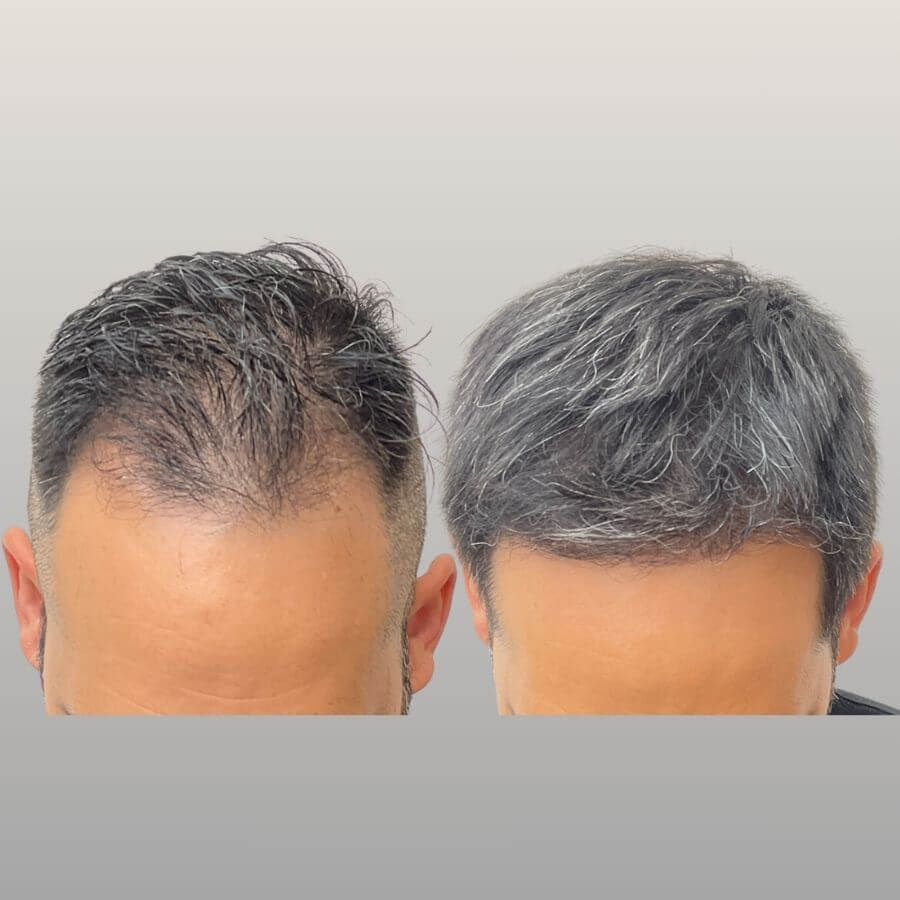
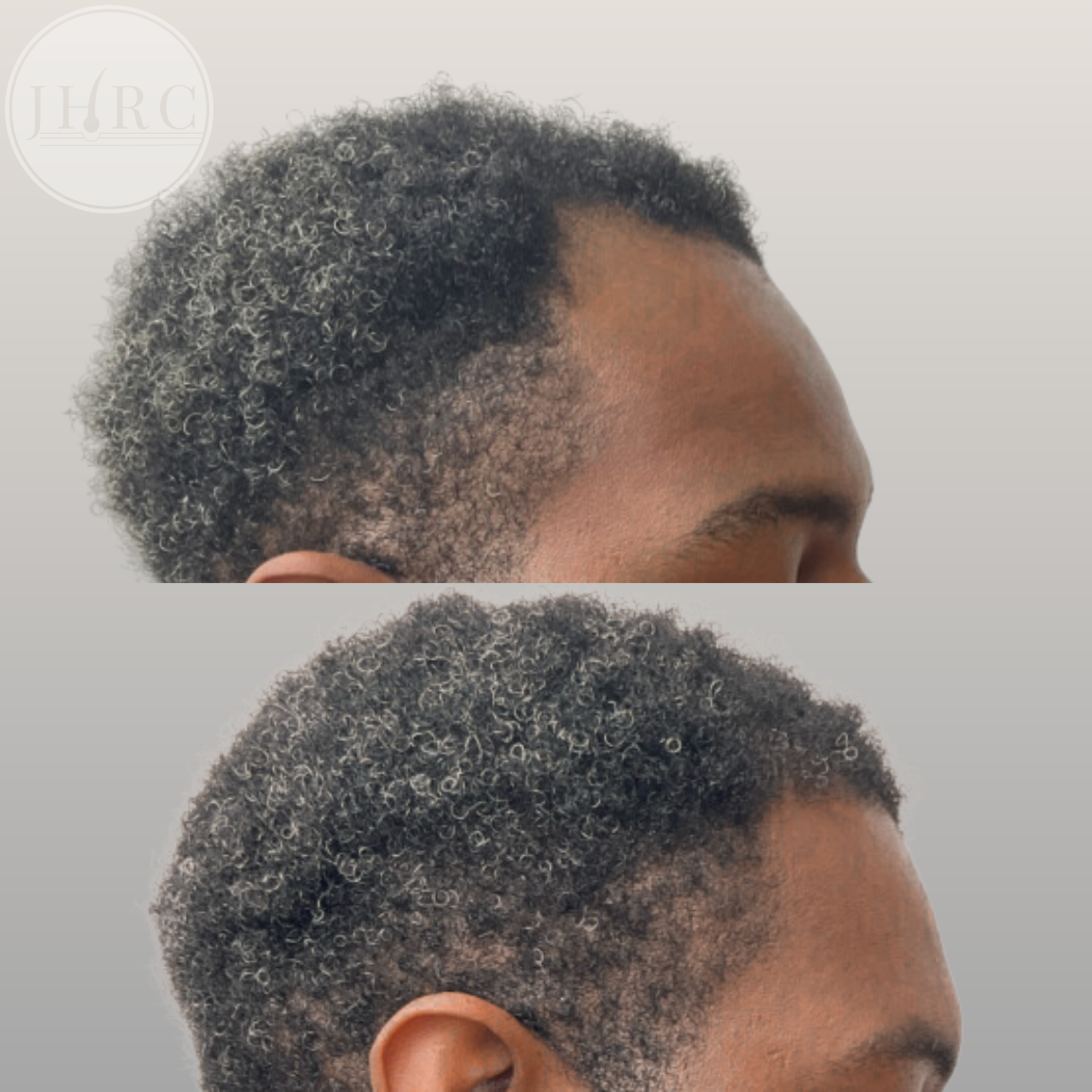
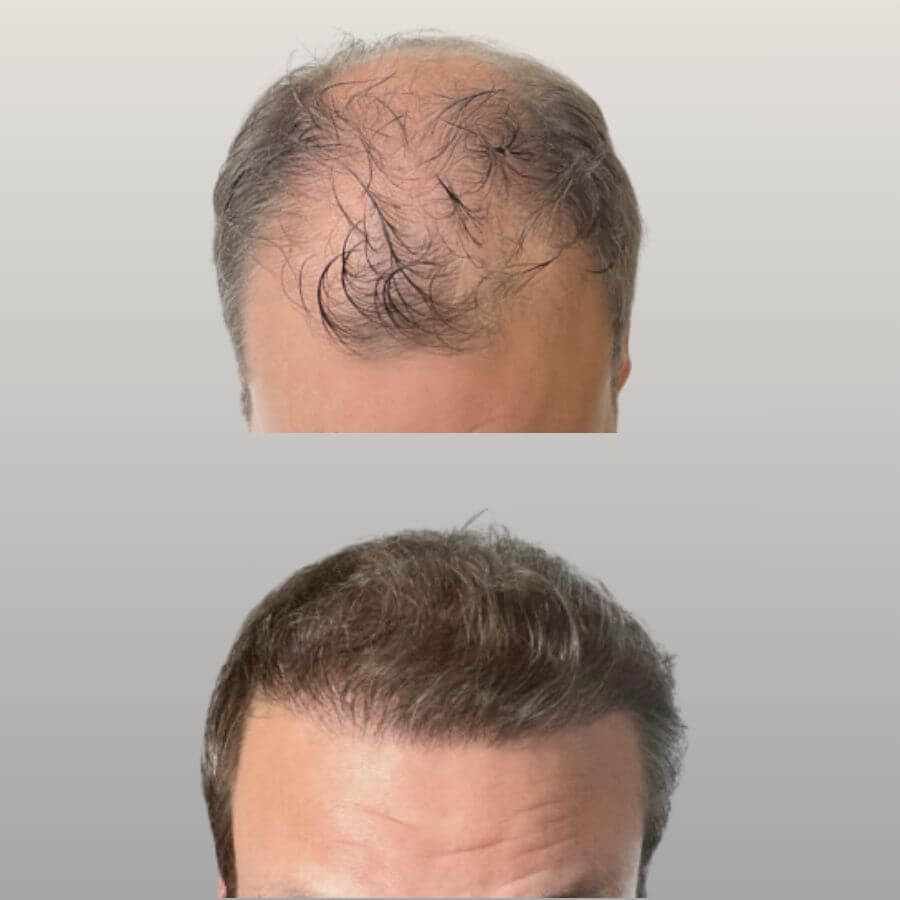
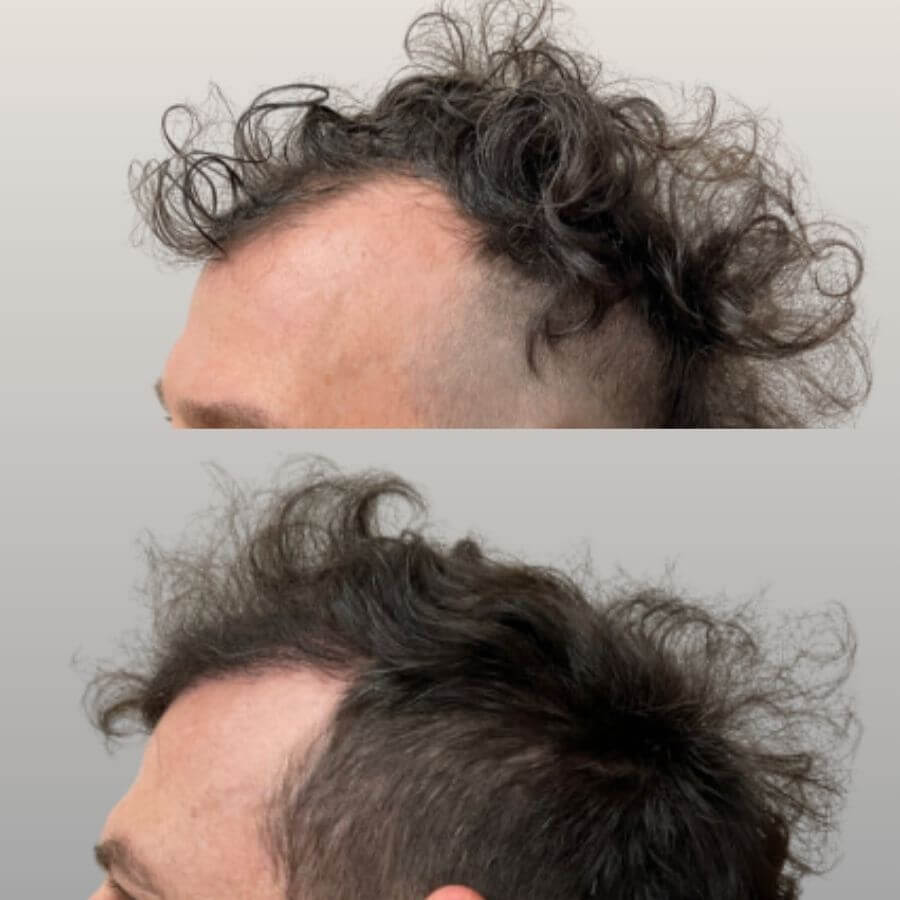
FUT Hair Transplant Results
Hair transplant results vary based on donor supply, hair characteristics, graft numbers, starting hair loss, and the individual treatment plan.
Common Questions About FUT Hair Transplants
Does FUT leave a scar?
Yes. FUT creates a linear scar in the donor area where the strip of tissue is removed. Longer surrounding hair can often conceal the area after healing.
Will I have to shave my head?
Generally, only the donor strip area needs to be trimmed. The amount of trimming depends on the individual procedure.
How is FUT different from FUE?
FUT obtains grafts from a strip of donor tissue, while FUE removes individual follicular units directly from the scalp.
How many grafts can be transplanted?
The number varies based on donor density, scalp characteristics, the area being restored, and the individual treatment plan.
When will transplanted hair grow?
Growth develops gradually following transplantation. Your surgical team will explain the expected healing and growth timeline.
Find Out Whether FUT Is Right for You
Choosing between FUT and FUE depends on your donor area, hairstyle, graft needs, and long-term hair-restoration goals.
Meet with the Jernigan’s team in Raleigh for a personalized evaluation.