
PRP vs PRF vs Exosomes for Hair Restoration:
Which Treatment Is Best for Hair Loss?
Hair loss can feel frustrating, especially when traditional options like topical treatments or medications fail to deliver long-term results. Thanks to advances in regenerative medicine, more natural and science-backed solutions are now available. Three of the most promising non-surgical treatments for hair thinning and pattern baldness are PRP (Platelet-Rich Plasma), PRF (Platelet-Rich Fibrin), and Exosome therapy.
But how do these treatments compare? Which one is right for your specific type of hair loss?
In this post, we’ll break down the science behind PRP, PRF, and exosomes, highlight their key differences, and help you decide which regenerative therapy might be best for your hair restoration journey.
Understanding Hair Loss
Hair loss can be triggered by a range of factors including genetics, aging, hormonal imbalances, stress, autoimmune conditions, medications, and poor scalp health. The most common type is androgenetic alopecia, also known as male or female pattern hair loss, which results from sensitivity to dihydrotestosterone (DHT).
As follicles shrink, hair becomes finer, shorter, and eventually stops growing. Regenerative therapies like PRP, PRF, and exosomes aim to revive these dormant follicles, restore scalp health, and reactivate natural hair growth — without surgery.
What Is PRP for Hair Loss?
Platelet-Rich Plasma (PRP) Therapy
PRP is a treatment that uses a patient’s own blood to stimulate healing and regeneration in the scalp. Here’s how it works:
A small sample of blood is drawn.
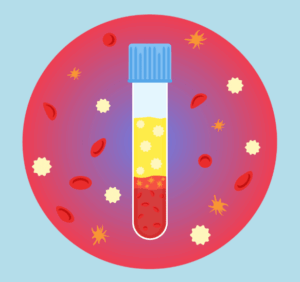
The blood is spun in a centrifuge to isolate platelet-rich plasma — a yellowish fluid containing concentrated growth factors.
The PRP is injected into areas of the scalp where hair is thinning.
These platelets release growth factors like PDGF (Platelet-Derived Growth Factor) and VEGF (Vascular Endothelial Growth Factor), which promote cell regeneration, stimulate blood flow, and rejuvenate hair follicles.
Benefits of PRP:
Natural and safe (uses your own blood)
Minimal downtime
Improves hair density and thickness
Clinically studied and widely used
Scientific Support:
A 2019 meta-analysis in the Dermatologic Surgery journal found that PRP significantly improved hair count and hair thickness in patients with androgenetic alopecia (Gupta et al., 2019).
What Is PRF for Hair Loss?
Platelet-Rich Fibrin (PRF) Therapy
PRF is considered an advanced, second-generation form of PRP. Like PRP, it’s derived from your own blood, but with some key differences:
The blood is spun at a lower speed, preserving more platelets, white blood cells, and stem cells.
PRF also forms a fibrin matrix — a scaffold that traps growth factors and releases them slowly over time.
This slow release can enhance the longevity of the treatment’s effects, offering deeper regeneration.
Benefits of PRF:
Contains more healing components than PRP
No additives or anticoagulants
Extended release of growth factors
Ideal for patients with more significant thinning
Clinical Use:
PRF is increasingly being used in dentistry, orthopedics, and dermatology, and its role in hair restoration is growing. Though large-scale studies are still emerging, early clinical experiences suggest longer-lasting results compared to PRP in some patients.
What Are Exosomes for Hair Regrowth?
What Are Exosomes?
Exosomes are tiny vesicles (30–150 nanometers) secreted by stem cells. They act as messengers, delivering genetic material, proteins, and growth factors to other cells — essentially reprogramming those cells to repair and regenerate tissue.
In hair restoration, exosomes are applied to the scalp (often via microneedling or injection), where they:
Stimulate hair follicle regeneration
Increase blood supply to the scalp
Reduce inflammation
Promote new hair growth and slow hair loss
Benefits of Exosome Therapy:
More potent than PRP/PRF in many cases
Acellular (no need to draw blood)
Anti-inflammatory and regenerative
Can treat both male and female pattern hair loss
Clinical Research:
A pilot study published in Aesthetic Surgery Journal Open Forum (2022) showed that over 80% of patients treated with exosomes reported noticeable hair density improvement within 6 to 12 weeks (Perez-Meza et al., 2022).
Another in-vitro study demonstrated that exosomes derived from dermal papilla cells increased hair shaft elongation and follicle proliferation (Kim et al., 2020).
PRP vs PRF vs Exosomes:
Feature PRP PRF Exosomes
Source Patient’s blood Patient’s blood Donor stem cells (acellular)
Growth Factor Release Immediate Slow (extended over days) High concentration
Contains Stem Cells? Minimal Yes (some) Yes (cell-free but carries signals)
Duration of Results 6–12 months 9–15 months (average) Potentially longer (still studied)
Downtime Low Low Low
Ideal For Mild to moderate thinning Moderate to advanced thinning Early-to-moderate + autoimmune cases
Which Treatment Is Right for You?
The best treatment depends on your individual goals, stage of hair loss, health condition, and budget. Here’s a general guideline:
Choose PRP if:
You’re in early stages of hair thinning
You prefer a natural, proven option
You want a more budget-friendly approach with minimal risk
Choose PRF if:
You have moderate hair loss and want longer-lasting results
You’ve already tried PRP but want more potency
You’re looking for enhanced tissue healing without additives
Choose Exosomes if:
You’re looking for the most advanced regenerative treatment
You want rapid results and minimal invasiveness
You have inflammatory or autoimmune-related hair loss
Frequently Asked Questions (FAQs)
Is PRF better than PRP for hair restoration?
PRF may be more effective for some individuals due to its higher concentration of platelets and stem cells, and its ability to release growth factors over time. However, the best choice depends on your response and hair loss severity.
Can I combine PRP or PRF with exosome therapy?
Yes! Many clinics, including Jernigan’s Hair Replacement Clinic in Raleigh, offer combination treatments for enhanced results. PRP/PRF can prepare the scalp for better absorption of exosomes, leading to synergistic effects.
How long do results last?
PRP: 6 to 12 months
PRF: Up to 15 months
Exosomes: Potentially longer — up to 18 months or more with ongoing research
Follow-up treatments every 6–12 months are often recommended for maintenance.
Conclusion
The field of hair restoration has advanced far beyond pills and transplants. Today’s regenerative treatments like PRP, PRF, and exosomes offer non-surgical, effective solutions backed by science and personalized to your needs.
Whether you’re just beginning to notice thinning or seeking to boost results from a hair transplant, Jernigan’s Hair Replacement Clinic offers the latest and most effective options in hair loss treatment in Raleigh and surrounding areas.
If you’re ready to explore these treatments, our team can help you find the best approach for restoring thicker, healthier hair — naturally and safely.
References
Gupta, A. K., Versteeg, S. G., & Rapaport, J. (2019). A Systematic Review of the Use of Platelet-Rich Plasma in Androgenetic Alopecia. Dermatologic Surgery, 45(5), 628–637. https://doi.org/10.1097/DSS.0000000000001763
Kim, H. et al. (2020). Exosomes Derived from Human Dermal Papilla Cells Promote Hair Growth. Stem Cells International. https://doi.org/10.1155/2020/1092396
Perez-Meza, D., et al. (2022). Clinical Use of Exosomes in Androgenetic Alopecia: A Pilot Study. Aesthetic Surgery Journal Open Forum. https://doi.org/10.1093/asjof/ojac020