
Finasteride vs. Minoxidil:
Oral vs. Topical Treatments for Hair Loss
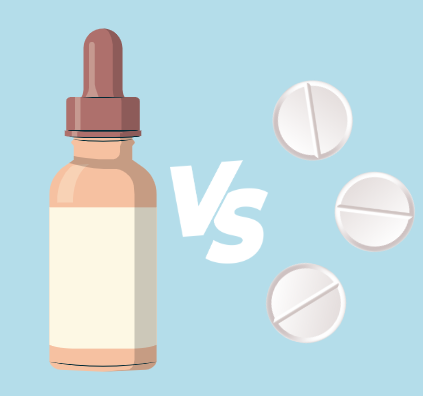
Hair loss is a common concern for both men and women. Two of the most widely used treatments are finasteride and minoxidil. Both are FDA-approved and effective but work in different ways. Knowing the differences—and how they can be combined—can help you choose the best option.
Finasteride
Finasteride is an oral prescription pill that lowers levels of dihydrotestosterone (DHT), the hormone responsible for shrinking hair follicles in male pattern baldness.
- Best for: Men with androgenetic alopecia in early to mid stages.
- Results: Slows or stops hair loss; some see improved density.
- Considerations: Must be taken daily. Side effects are rare but can include low libido or mood changes. Results may take 6–12 months.
Minoxidil
Minoxidil was first developed as a blood pressure medication but is now common in hair restoration. It’s available as topical foam or liquid (OTC) and as low-dose oral tablets (off-label).
- Best for: Both men and women with thinning hair.
- Results: Stimulates regrowth and thickens hair in thinning areas. Visible results within 3–6 months.
- Considerations: Topical use can cause scalp irritation; oral use may cause swelling or excess hair growth.
Oral vs. Topical Options
- Finasteride: Only effective orally; lowers DHT systemically.
- Minoxidil: Topical works at the scalp; oral provides a whole-body effect. Oral may be easier for some but requires medical supervision.
Effectiveness & Combination Therapy
- Finasteride: Strong at preventing further loss.
- Minoxidil: Strong at encouraging regrowth.
- Together: Often the most effective approach—finasteride preserves existing hair, while minoxidil stimulates new growth. Studies show combination therapy provides higher satisfaction than either alone.
Side Effects
- Finasteride: Rare sexual side effects, possible mood changes.
- Minoxidil topical: Scalp irritation, temporary shedding, unwanted hair growth if applied incorrectly.
- Minoxidil oral: Swelling, increased body hair; off-label use only.
Who Should Consider Them?
- Finasteride: Men in their 20s–40s with early thinning.
- Minoxidil topical: Men and women who want easy, OTC regrowth support.
- Minoxidil oral: For patients who can’t tolerate or prefer not to use topical.
- Combination: Recommended for many patients seeking the strongest results.
Conclusion
Finasteride and minoxidil are proven, effective hair loss treatments. Finasteride prevents loss by lowering DHT, while minoxidil stimulates regrowth. For many, the best results come from using both together under medical guidance. At Jernigan’s Hair Replacement Clinic, we tailor treatment plans—including finasteride, minoxidil, and advanced options like PRP, PRF, or exosomes—to your unique needs.
References
- American Academy of Dermatology Association. “Hair Loss: Diagnosis and Treatment.” https://www.aad.org
- U.S. Food & Drug Administration. “FDA Approved Products: Finasteride and Minoxidil.” https://www.fda.gov
- Gupta AK, et al. “The efficacy and safety of finasteride combined with minoxidil in men with androgenetic alopecia.” Journal of Dermatological Treatment. 2019.
- Sinclair R. “Oral minoxidil for the treatment of hair loss: A review.” Australasian Journal of Dermatology. 2018.